September 9, 2026 ~ ROSH HASHANA.
d January 26, 2026
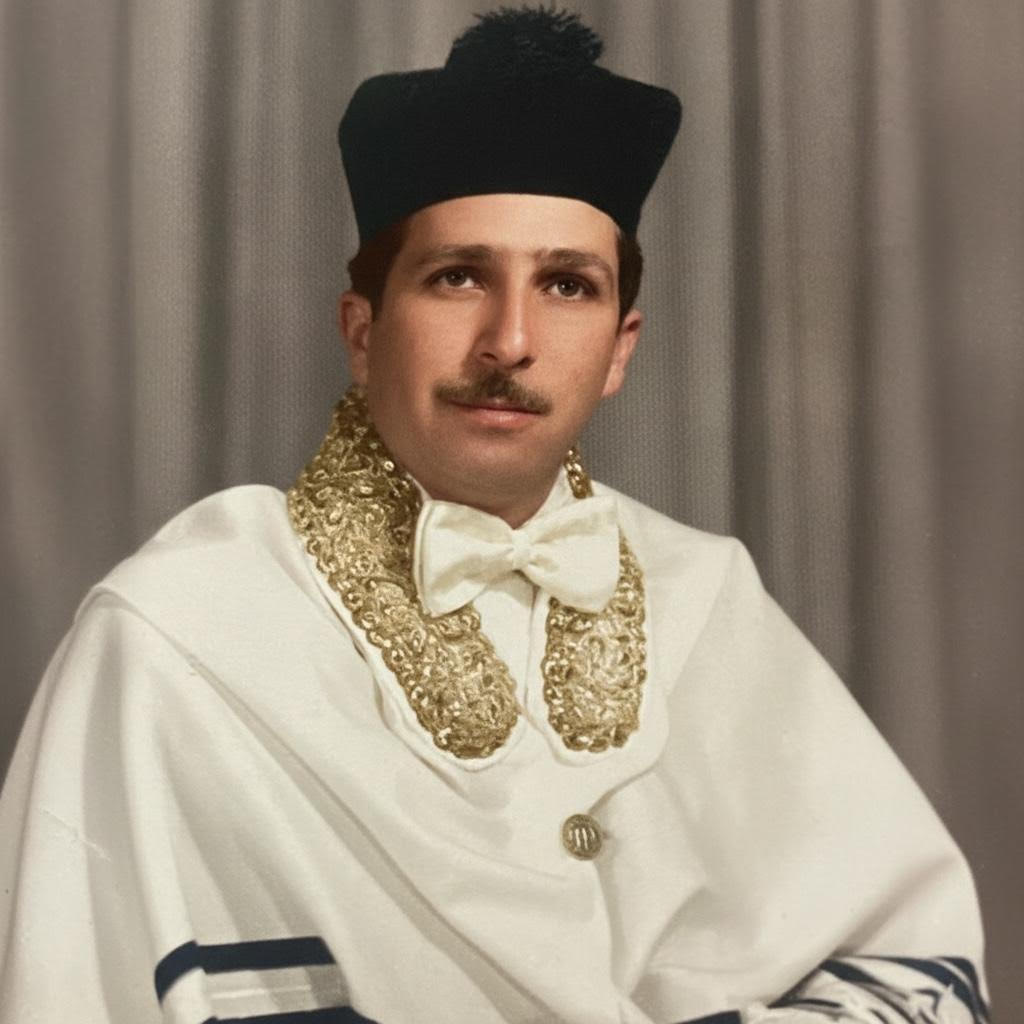
Cantor Meir Levy was born and raised in Israel before moving to New York and becoming the Hazzan of Congregation Ahi Ezer for half a century. Prior to his time in Brooklyn, Meir led the service at the Kotel at the reunification of Jerusalem in 1968 with over 100,000 people in attendance! When he came to the United States and started to pray in Ahi Ezer, the people were amazed by his powerful voice amd offered him a job to remain there. It was there that he cultivated a deep love for music, especially for the children that he trained in the Ahi Ezer Choir. Over the years, he put out many records with this choir. He officially retired from his Hazzanut post in 2020 amd passed away on January 26, 2026. Anyone that knew Meir Levy understood that he got the most pleasure in life by making other people happy with his songs.
| Section | Pizmon | Page | Song | Commentary | Recordings | Application |
|---|---|---|---|---|---|---|
| Qiddush | 0.2 | 7a | צור משלו אכלנו | Pizmon for Birkat HaMazon. Each blessing of Birkat Hamazon is alluded to. Maqam Hijaz. |
Meir Levy: EH |
|
| Baqashot | 17 | 26 | מה נכבד היום מימים |  Mordekhai Labaton Maqam Saba Saba. Written by H Mordekhai Labaton (1780-1869). About the importance and centrality of Shabbat. Saba. Aharon Rahamim Hares Baqashot Manuscript, 1917 Mordekhai Labaton Maqam Saba Saba. Written by H Mordekhai Labaton (1780-1869). About the importance and centrality of Shabbat. Saba. Aharon Rahamim Hares Baqashot Manuscript, 1917 |
Meir Levy: EH |
שועת עניים |
| Baqashot | 23 | 30 | כי אשמרה שבת |  Abraham Ibn Ezra Maqam Saba Saba. A Z Idelsohn notes, 1923 Aharon Rahamim Hares Baqashot Manuscript, 1917 Abraham Ibn Ezra Maqam Saba Saba. A Z Idelsohn notes, 1923 Aharon Rahamim Hares Baqashot Manuscript, 1917 |
Meir Levy: Nishmat |
שמחים |
| Baqashot | 61 | 69 | ידיד נפש | Elazar Azkari Maqam Sigah 16th century. He defines this piyut as “a supplication for union and the desire of love”. Sigah. A Z Idelsohn notes, 1923 Aharon Rahamim Hares Baqashot Manuscript, 1917 |
Meir Levy: Naqdishakh |
ממצרים |
| Rast | 124 | 116 | אתה יודע | Raphael Tabbush |
Meir Levy: EH |
נקדישך |
| Rast | 125 | 116 | רפא צירי | Raphael Tabbush Refa Siri is a special composition written by H Raphael Tabbush A"H. The melody is attributed to a Judeo-Spanish song entitled "Triste Vida" (A Sad Life). The song has an acrostic of "Refael" and has been viewed as a prayer for good health. The first stanza of the song recognizes God as the ultimate doctor and healer. The song also contains a prayer for God to open the gates of mercy and to send freedom to our nation. The pizmon was used by H Moshe Ashear A"H (d.1940) for the PIZMON SEFER TORAH in 1940 for Shabbat Vayera because Abraham is thought to have been recovering from the Berit Mila at the opening of the perasha. Hamaoui Manuscript Tabbush Manuscript |
Meir Levy: Mimisrayim |
אל ההודאות |
| Rast | 148 | 128 | יחיד אל נורא | Moses Ashear Ashear Manuscript |
Meir Levy: LaEl Barukh |
|
| Mahour | 170 | 146 | אל חון על בת המענה | Baby Girl. |
Meir Levy: Nishmat Meir Levy: Keter |
ה' מלך |
| Mahour | 186 | 153 | נעימה לי | Moses Ashear Eli S Haddad. Ashear Manuscript |
Meir Levy: Qaddish |
שועת עניים |
| Mahour | 187 | 154 | ריבה ריבה | Moses Ashear Gabe Shasho. Ashear Manuscript |
Meir Levy: Semehim |
ואני תפלתי |
| Mahour | 191 | 156 | בואי ברנה | Moses Ashear Bo'ee BeRina is one of the most beautiful compositions authored by H Moshe Ashear (d. 1940). This pizmon was written for the groom, Seymour Charles Semah, in honor of his wedding to Sara Ashkenazie (daughter of Lulu and Aharon Ashkenazie). The content of the pizmon is written from the point of view of the Hatan talking to his new wife. Although the acrostic is Moshe- named after the author, the names Shaul, Sion, and Semah are alluded to in the first, second, and last stanzas, respectively. The melody of this pizmon is from the Arabic "Hawad Min Hina," sung by Egyptian singer Munira al-Mahdiya (1884-1965). Although this song is only listed in Maqam MAHOUR, Ashear made another melody to this pizmon in Maqam HIJAZ. It is the HIJAZ version that Ashear applied to Semehim on Shabbat Haye Sara in 1940. The pizmon relates to this Torah portion, because Isaac becomes a groom. Ashear Manuscript |
Meir Levy: Naqdishakh |
שמחים |
| Mahour | 192 | 157 | יה הרם סלה | Moses Ashear Haddad. Ashear Manuscript |
Meir Levy: SA |
|
| Ajam | 203 | 167 | שיר אגיד לאל דר חביון | Alludes to the ten sefirot that God used to create the world. Tabbush Manuscript |
Meir Levy: Keter |
שמחים |
| Ajam | 214 | 172 | אני לקראת דודי ארוץ | Raphael Tabbush Engagement or Wedding. Manuscript |
Meir Levy: EH |
ממצרים |
| Ajam | 224 | 177 | ינון שמו איפה | Raphael Tabbush This pizmon (AJAM, page 177), whose opening words are translated as “It Will Flourish,” is a song that celebrates the beauty of the Torah and the aspirations of the Jewish people. It is most likely composed by the great Jewish poet H Raphael Antebi Tabbush (d. 1918) from Aleppo, Syria. There are 4 stanzas in this song corresponding to the Hebrew name of ‘YisHaq’ (יצחק); which happens to be the author’s middle name and the name of his father. Taken from an Arabic march called “Intiyamo,” this melody can be heard with great enthusiasm when applied to the prayer-piece Shav’at Aniyim in virtually all Syrian Sephardic synagogues throughout the world. The song opens with a reference from Psalms 72:17 about someone named “Yinon,” which in Hebrew is translated as ‘it will flourish.’ According to rabbinic tradition, ‘Yinon’ refers to a future Messianic figure (see end of Piyut “Et Sha’are Rasson”). The author asks, where is Yinon of the Messianic age, and when will God bring the time when the people can rejoice in the Temple? He requests God to return the divine presence to the Temple and to treat the people with the kindness that they yearn for. The third stanza praises God for giving us the Torah; a gift exclusively for the Jewish people for them to both enjoy and live by. The song concludes with a prayer to gather the scattered people from foreign lands, to restore the Beit HaMiqdash as a place of song, and to shower the Jewish people with God’s greatness. Tabbush Manuscript |
Meir Levy: SA |
שועת עניים |
| Ajam | 242 | 191 | כל עת אליך | Moses Ashear Naftali Tawil. Arabic is: "Tilet Yamahla Nourha". Ashear Manuscript |
Meir Levy: Qaddish |
שמחים |
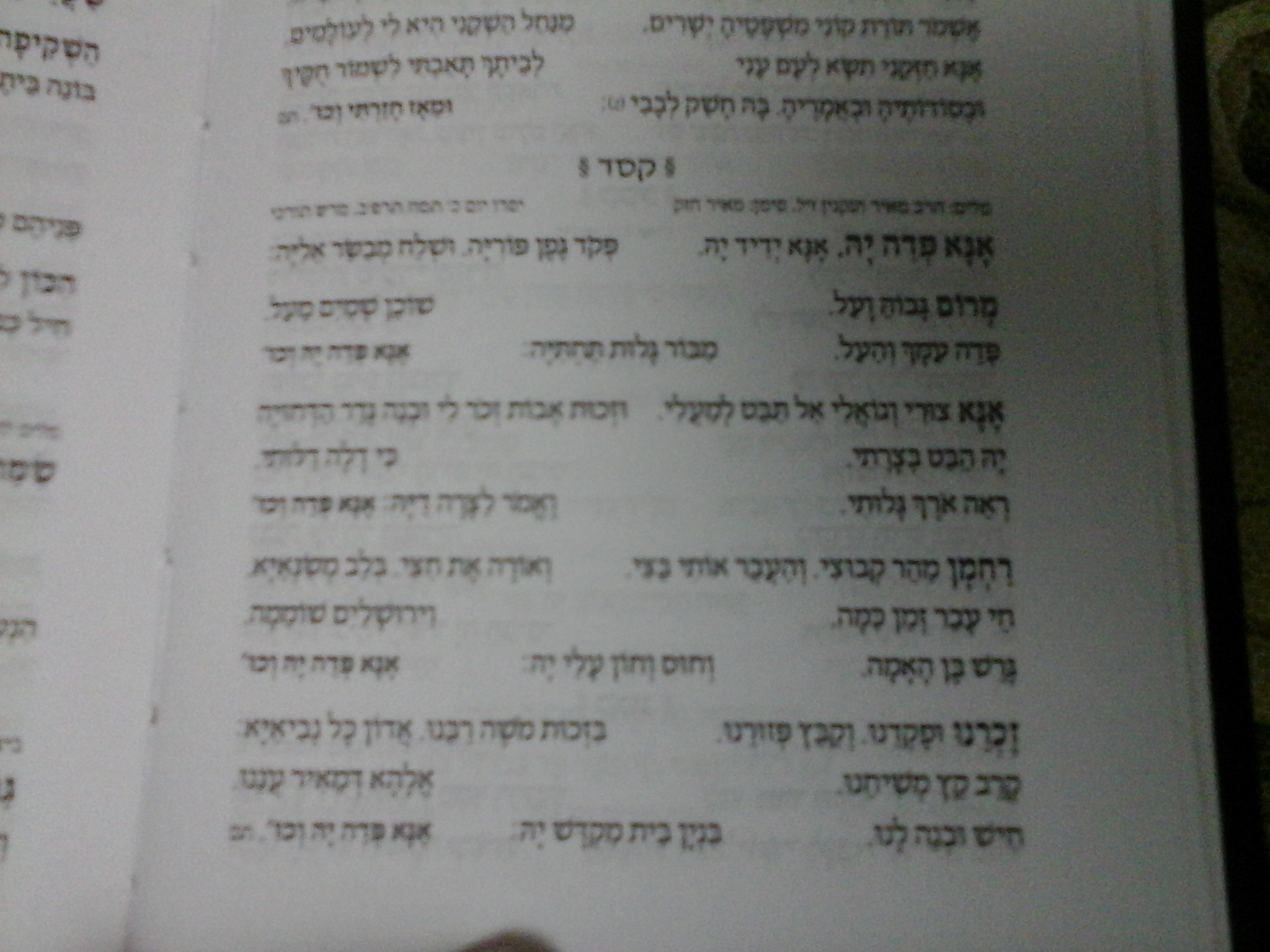
| 254.93 | אנא פדה יה | Maqam Ajam Melody is a Turkish march. Pizmon is by R Meir Waknin, 1882. Ana Pede Yah (Pizmon from 1882) |
 Meir Levy: Nishmat Meir Levy: Naqdishakh Meir Levy: Nishmat Meir Levy: Naqdishakh |
הללויה | ||
| Nahwand | 262.1 | 208a | ירושלים של זהב | Naomi Shemer The pizmon "Yerushalayim Shel Zahab" (NAHWAND, page 208A), translated as "Jerusalem of Gold," is an Israeli song written by Naomi Shemer (1930-2004). This song, written in May 1967, became an unofficial second national anthem after Israel won the Six Day War (June 1967) and liberated Jerusalem. It's melody is based on the Basque lullaby "Pello Joxepe." The song originally had 3 stanzas but a fourth one was added after the Six Day War. The theme of the song is about the Jewish people's longing for Jerusalem. There is a stark contrast between the second stanza, which mourns over the sad, dry, and empty streets, and the amended fourth stanza, which celebrates the return to Jerusalem with happy streets full of life. Some say that the timing of the composition of this song is nothing short of prophetic. The melody of this song made its way to synagogue services and is usually heard transposed to various pieces of prayer around Yom Yerushalayim (28 Iyar). |
Meir Levy: Qaddish |
שמחים |
| Nahwand | 276 | 215 | רעיוני יחיד בך שמתי | Raphael Tabbush Hamaoui Manuscript Tabbush Manuscript |
Meir Levy: Nishmat |
ממצרים |
| Nahwand | 278 | 216 | רחום אתה כי גאלת | Raphael Tabbush "Rahum Ata" (NAHWAND, page 216) is composed by H Rephael Tabbush (Aleppo, ~1830 - Cairo, 1918), author of the "Shir Ushbaha" pizmonim book (1888). According to the notes of H Moshe Ashear, this song is reserved for Shabbat Beshalah (Shabbat Shira), and the Seventh Day of Pesah. There are 4 stanzas in this pizmon; corresponding to ר-פ-א-ל. The melody of this pizmon is called "Bafta Hindi," and can be applied to Mimisrayim on weeks of Maqam NAHWAND. "Merciful are You for redeeming us from captivity," the pizmon opens; referring to the captivity of slavery under Pharaoh. The second verse is a prayer to redeem us now and to send Eliahu the Prophet to herald the redemption. After we hear of the redemption, the third verse says that we will sing praises to God. The fourth verse mentions how on the seventh day after the Exodus, God rescued our nation by overpowering nature and splitting the Red Sea. Hamaoui Manuscript Tabbush Manuscript |
Meir Levy: Mimisrayim |
ממצרים |
| Nahwand | 279 | 216 | יחיד רם חי לעולם | Isaac Abadi Dahab Turkish melody. |
Meir Levy: Semehim |
אל ההודאות |
| Nahwand | 285 | 220 | אהלל ואביע | Moses Ashear "Ahallel Veabia" (NAHWAND, page 220), a pizmon associated with the festival of Shabuot, is composed by H Moshe Ashear (1877-1940). There are fifteen stanzas in this pizmon; all rhyming with one another. The acrostic of the pizmon is "Anokhi Hashem Elohekha, Lo Tahmod Asher Lere'ekha" (אנכי ה׳ אלהיך לא תחמד אשר לרעך); referring to the first and tenth commandments, respectively. The melody of this pizmon is called “Izmir Sefasi”; named after Izmir, Turkey. This pizmon is a poetic rendition of the narrative in Exodus 19 and 20; the narrative that discusses Israel's preparation, receiving, and acceptance of the Ten Commandments on Mount Sinai. The song concludes with a plea for God to listen to our prayers of returning the Jews to Zion so that they can live there in peace. The melody of this pizmon is traditionally applied to Halleluya (Psalm 150) on Shabuot, as well as on Shabbat Yitro and Shabbat Vaethanan. Ashear Manuscript |
Meir Levy: Mimisrayim |
הללויה |
| Nahwand | 286 | 222 | מלך אב רם | Moses Ashear In honor of the birth of Joseph Bijou. Written by M. Ashear. Arabic is "Ya Dounia Ya Gharami", by Abdel Wahab. Ashear Manuscript |
Meir Levy: EH |
הללויה |
| Nahwand | 287 | 223 | יעלוזו ביה | Moses Ashear Shabot. Ashear Manuscript |
Meir Levy: SA |
ה' מלך |
| Nahwand | 299.01 | 237a | מלכי צורי אל כביר | Haim S Aboud |
Meir Levy: Naqdishakh |
|
| Bayat | 305 | 240 | יפת עין לבבתיני | Ezra Attiah Siman "Yeshaya". Yeshaya is the name of his father. Pizmon for Abi HaBat. |
Meir Levy: Semehim |
נשמת |
| Bayat | 340 | 260 | בעדי יה בעדי | Moses Ashear Ashear Manuscript |
Meir Levy: EH |
אל ההודאות |
| Bayat | 346 | 266 | אל מאד נעלה | Moses Ashear The pizmon “El Meod Na’ala” (BAYAT, page 266) is one of the most famous compositions written by cantor H Moshe Ashear (1877-1940). This was written in honor of the groom Mr Elie J Gindi (born in 1900, Syria) for his wedding (circa 1924 in Brooklyn, NY). The acrostic of the pizmon is “Eliah Moshe” with the first word of each of the three stanzas spelling “Eliah” and the second word of each stanza spelling “Moshe.” The names of the bride’s father, Moses (Attieh), and the bride, Rachel, are alluded to in the first and third stanza’s respectively. The melody of this pizmon is from polka music from Istanbul, Turkey. In the prayers, this melody is commonly applied to Semehim on weeks of Maqam BAYAT. This song is also traditionally used as the PIZMON SEFER TORAH for Shabbat Shemot because of it mentioning Moshe and Aharon, two important people introduced in this Torah portion. Ashear Manuscript |
Meir Levy: SA |
שמחים |
| Bayat | 372 | 292 | דברי שירתי- מגן בעדי | Moses Ashear In honor of birth of Moshe Ashear's grandson. December 10, 1937. Shrem Manuscript Leaflet |
Meir Levy: Qaddish |
ראו בנים |
| Hoseni | 430 | 353 | אמרי פי והגיוני | אברהם Maqam Hoseni or Tahir. Attiah Manuscript Abraham Sitehon Manuscript Yabess Manuscript |
Meir Levy: Naqdishakh |
שמחים |
| Saba | 471 | 388 | בנין מעוני תמהר | Tabbush Manuscript |
Meir Levy: Naqdishakh |
|
| Saba | 472 | 389 | יה אודה לך יה | Raphael Tabbush Hamaoui Manuscript Tabbush Manuscript |
Meir Levy: SA |
שועת עניים |
| Saba | 488 | 402 | רחום דל דאגי מני | Raphael Tabbush |
Meir Levy: Mimisrayim |
כתר |
| Saba | 493 | 406 | אערך מהלל ניבי | אנכי דוד בן אהרון חסין חזק This pizmon (SABA, page 406), Eerokh Mahalal Nibi, is composed by the most celebrated Moroccan poet, Rabbi David b. Aharon Hasin (1727-1792). There are 19 stanzas in this long pizmon, making the acrostic: אנכי דוד בן אהרון חסין חזק. The chorus of "Likhod Hemdat Lebabi Eliyahu HaNabi,” translated as "In honor of the beloved of my heart Eliyahu the Prophet,” is repeated after each stanza. This song provides a poetic compilation of the various reasons why Eliyahu HaNabi, discussed prominently in 1 Kings, is honored. In addition, the song makes references to Midrash; saying that Eliyahu “is” [a reincarnation of] Pinehas the Priest. The main association of this pizmon is for a Berit Milah, because it is traditionally said that Eliyahu's presence is at each Milah. It is also associated with Shabbat Pinehas (or Balaq), because it is when we read about the story of Pinehas and his heroic actions. In addition, the story of Eliyahu HaNabi is read in the Haftara of this Torah portion. Yabess Manuscript |
Meir Levy: Qaddish |
שמחים |
| Saba | 495 | 410 | אתה אהובי | Abraham I Antebi Ata Ahubi (SABA, page 410), translated as "You are my Beloved," is the first song heard in a young boy's life; at his Berit Milah at eight days old. Composed by the illustrious H Abraham I Antebi (1765-1858), Chief Rabbi of Aleppo, the song has the acrostic "Abraham Hazaq." Each of the 6 stanzas end with the word "Eyn," meaning eye. In the first stanza, the author thanks God for "Him giving happiness in my heart" and is comforted that "in You, I can lean." The next four stanzas refer to the Berit Milah, the covenant between God and Abraham, and allude to some of its festive rituals. The last stanza, in the original version of the song, states "Strengthen Aram Soba (Aleppo), the good city, and also the [resting] place of the master, Ezra [HaSofer], a fine pearl that the eye shall see." In later publications, in an attempt to standardize the song, this last stanza was altered to remove the references to Aleppo. This melody is applied to Naqdishakh preceding a Berit Milah as well as on Shabbat Lekh Lekha and Tazria. Attiah Manuscript Yabess Manuscript Abraham Sitehon Manuscript Shire Zimrah, Algiers, 1889 |
Meir Levy: Naqdishakh |
נקדישך |
| Saba | 496 | 411 | מה טוב מה נעים | Mordechai Abadi This pizmon (SABA, page 411), whose opening words are “How Good, How Nice Are Things In Their [Proper] Time,” is a song for the Mila; the circumcision ceremony. It is composed by the Aleppian sage, H Mordekhai Abadi (1826-1884), author of “Dibre Mordekhai.” The acrostic is “Mordekhai Hazaq Abadi,” and each of the 6 stanzas is followed by the famous chorus “Eliahou, Mebaser Hu...”. In the chorus, we recall Eliahou the Prophet as one who announces the redemption and who attends every Mila ceremony. There are references in the song to three blessings recited: "HaGefen," “Al HaMila,” and “Koret HaBerit," as well as a reference to the tradition of setting up a special chair for Eliahou, who is referred to as the “angel of the covenant.” At the song's conclusion, in the merit of Abraham (the father of the covenant), there is a prayer to rescue (like in the days of Mordekhai) all those who partake in the festive meal of this very special Misvah (one which weighs equivalent to all the other laws combined). In differing sources, this song is classified as either Maqam SABA, BAYAT or NAWAH, and in the morning prayers of a Mila, this melody can be heard for El Hahodaot. Abraham Sitehon Manuscript A Z Idelsohn notes, 1923 British Library Or. 10375 |
Meir Levy: SA Meir Levy: Qaddish |
אל ההודאות |
| Saba | 508 | 423 | עזי עזי עזי עזי וזמרת יה | Ezekiel Hai Albeg This pizmon (SABA, page 423), whose chorus alludes to the Song of the Sea (Exodus 15) as well as Isaiah 54, has opening words that are translated as "My Strength and My Defense is from God; You will not be put to shame or disgrace for God will comfort you". This song is composed by Cantor Ezekiel Hai Albeg as indicated by the acrostic: Yehezqel Hai. In this song, the author laments about his inability to go back to the Land of Israel due to being stuck in exile and surrounded by his enemies. The opening words in the Hebrew song "Ozi Ozi Ozi Ozi VeZimrat Ya" closely resembles the opening words in the corresponding Arabic song "Hizee Hizee Hizee Hizee Mahrumatekh." The Arabic song is by a famous Syrian Jewish singer named Rachel Samocha (1895-1955), also known as Fayrouz Al Halabiya. There are 4 stanzas in this song and a recurring chorus (Ozi Ozi). The melody of this song can be applied to El Hahodaot on weeks of Maqam SABA. This melody, as well as the pizmon itself, is said to be closely linked to Shabbat Ki Tesse due to the words of consolation "Lo Teboshi Lo Tikalmi" from that weeks Haftarah portion (Isaiah 54:4). |
Meir Levy: Semehim |
אל ההודאות |
| Saba | 511 | 427 | רצני אהוב | Ezra Dweck and Gabriel Shrem This pizmon (SABA, page 427), whose title can be translated as “My Beloved Will Want Me,” is a song that describes the love between man and his creator. The Hebrew words to the pizmon were composed by H Ezra Dweck with the assistance of Hazzan Gabriel A Shrem. It is written in honor of the great rabbi, H Baruch Ben Haim, who moved into the Syrian Jewish community of Brooklyn circa 1950 and got married to Charlotte, the daughter of the Chief Rabbi, Jacob S Kassin. The melody of this is from an Arabic song by the famous and influential Syrian-Egyptian composer, singer, and Oud player, Farid Al-Atrash (1910 - 1974). The song, called “Ghali Ya Bouy” (Dear Boy), was featured in the 1948 film called “Bolbol Effendi” (Mr Nightingale), and became wildly popular and beloved throughout the world; our community included. The melody of this song has been adapted to many pieces of prayers, such as Halleluya (Psalm 150), when prayers are being conducted in Maqam SABA. In addition, this song became associated with Pesah, and the entire month of Nissan, due to the references to them mentioned in the song’s second stanza. Leaflet Photograph of H Barukh Ben Haim |
Meir Levy: Qaddish Meir Levy: Naqdishakh |
הללויה |
| Sigah | 527 | 442 | הימי סתמי | Raphael Tabbush Hamaoui Manuscript Tabbush Manuscript |
Meir Levy: EH Meir Levy: Keter |
אל ההודאות |
| Sigah | 540 | 449 | ארך זמני | Pesah association. |
Meir Levy: SA |
שועת עניים |
| Sigah | 545 | 452 | אגילה אגילה | Hamaoui Manuscript Tabbush Manuscript |
Meir Levy: Mimisrayim |
אל ההודאות |
| Sigah | 552.1 | 458 | נגילה הללויה | Asher Mizrahi Siman: Asher Hazaq. Lahan: Lah Yiglala. |
Meir Levy: Qaddish |
|
| Hijaz | 574 | 478 | רבת שבעה לה נפשי | Raphael Tabbush This pizmon (HIJAZ, page 478), whose opening words are translated as “My Soul is Satiated” (based on a reference from Psalms 123:4), is a song for Yom Kippur. It is composed by the great Aleppian poet, H Raphael Antebi Tabbush, whose first name, ‘Raphael’ (רפאל), forms the acrostic of this 4 stanza rhyming song. The origin of this melody is the Spanish song called “Mis Hermanos” (My Brothers), and it can be applied to Naqdishakh on the morning of Yom Kippur. The theme of this song is about the “Day of Judgment” and the Hebrew word “Dean” (דין), or judgment, is the last word of each stanza. The author opens with an expression of trouble and despair, saying that his soul is filled with the suffering caused by the hands of his adversaries. He asks God for help; asking Him to judge against these adversaries. The author then recognizes that his transgressions are the main causes of his sufferings and then expresses regret about his misdeeds. He ponders to himself “If I don’t observe the commandments of the Torah, how will I come out on the day of judgment?” In the third stanza, the author asks for forgiveness and for his lot to be placed with “good people” or those who are knowledgeable in law. The author concludes by asking God to save him, to satiate him with good (in contrast to the satiation mentioned in the opening stanza), and to judge him favorably, leniently, and with mercy. Tabbush Manuscript |
Meir Levy: Naqdishakh Meir Levy: Qaddish |
נקדישך |
| Hijaz | 575 | 479 | עזרני אל חי | Raphael Tabbush This pizmon (HIJAZ, page 479), whose title is translated as "Help Me, O' Living God," is a song for the Aseret Yeme Teshuba, also known as the Ten Days of Repentance. This pizmon, composed by Aleppian poet, H Raphael Antebi "Ades" Tabbush, is one of the few Sephardic pizmonim that has managed to penetrate through to the greater Jewish world, especially the Chabad Hasidic sect. This song, whose acrostic is "ADES" (עדס), which is the official family name of H Raphael, has three rhyming stanzas. In this song, the author, H Raphael, asks God to assist him in his struggle against his YeSser HaRa', or evil inclinations, and asks God to assist him to repent for his past misdeeds. "Without you, O'Savior, there is no salvation!" he says. He then continues to say that he merits forgiveness from God, because he has "returned" from his transgressions and he will not continue in his past sinful ways. He concludes to ask God to distance himself from "Hebrat Kat HaSefoni," those who go after their YeSser HaRa' as alluded to in Joel 2:20 (according to Talmudic interpretation). The melody of this pizmon is taken from the Arabic "Ya Fareed El Hosn Ashaq Gamalak,' and it can be transposed to Shav'at Aniyim exactly one day a year, on Yom Kippur alone. |
Meir Levy: SA Meir Levy: Naqdishakh |
שועת עניים |
| Hijaz | 591 | 490 | שמח נפשי | שלמה חזק This pizmon (HIJAZ, page 490), whose opening words can be translated as “My Soul Will Rejoice,” is one of the most popular pizmonim known in the Syrian Jewish tradition. In Shabbat morning services, whenever its joyous melody is transposed to Mimisrayim, it seems to bring immense happiness to the crowd. The melody of this is from the Arabic song “Qadokh Al Mayas” and over the years, a number of Hebrew pizmonim have been composed to fit into this great melody (i.e. ‘Elekha Kama Besari’ and ‘Niflaot Nissim’ are other Hebrew pizmonim written to the same melody). The Hebrew pizmon “Samah Nafshi” is the version of the song that has survived in part due to its inclusion in the important book “Shir Ushbaha” by H Raphael Cohen (1922). The author of the song is unknown, but the acrostic of the song suggests that it was written either by or in honor of a “Shelomo” (שלמה חזק). In its 5 rhyming stanzas, the author exclaims that his soul will rejoice if the following prayers are answered: solving all troubles of the Jewish people, a returning of Israel to the status it had during the days of King Solomon, the rebuilding of the Temple in Jerusalem as well as the entire Land of Israel, and ultimately, the announcement of a redeemer by Eliahou HaNavi that the Messianic age has arrived. |
Meir Levy: Naqdishakh Meir Levy: Keter |
ממצרים |
| Hijaz | 612.1 | Bilbul Nagah Al LaShata Nil | Popular Arabic melody. |
Meir Levy: Nishmat |
אל ההודאות | |
| 684 | 318bf | אערוך נא תפילתי | Haim S Aboud Maqam Bayat |
Meir Levy: Mimisrayim |
||
| 2110 | 514u | שואף כמו עבד | Shelomo Ibn Gabirol Song is meant to be a Reshut for Nishmat for Shaharit of Rosh Hashanah---The song compares us to slaves who must return to serve our master, Hashem. |
Meir Levy: Naqdishakh |
נקדישך | |
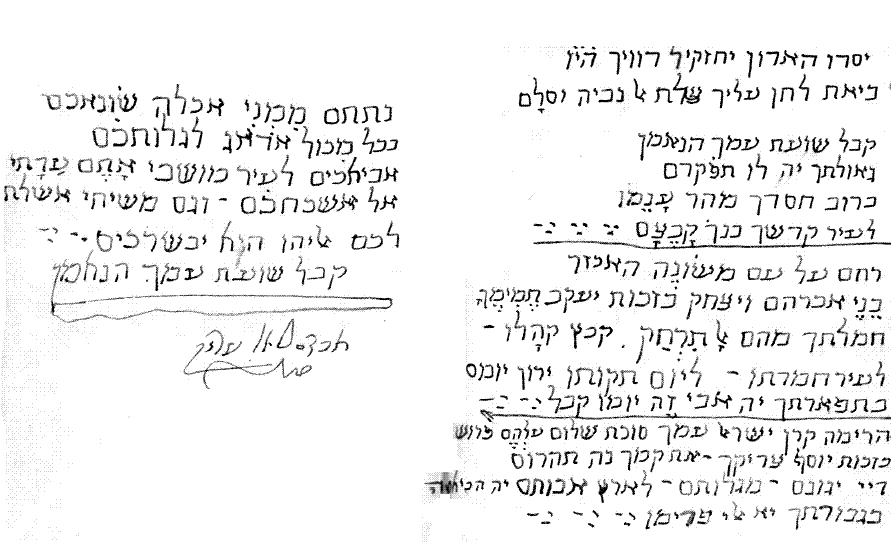
| 2194 | קבל שועת עמך הנאמן | EDweck Maqam Bayat Lahn: עליך צלח אל נביה וסלם Shrem Manuscript |
Meir Levy: Nishmat |
הללויה | ||
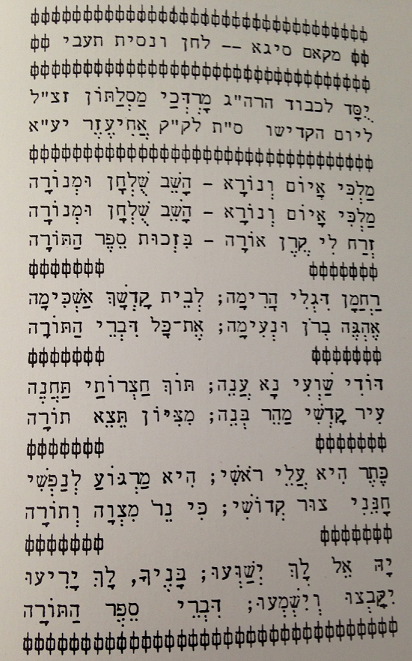
| 2642 | מלכי איום ונורא | Ezekiel Hai Albeg Maqam Sigah Lehen: Wansit Ta'abi. Pizmon by E Albeg, in Maqam Sigah, composed in honor of H Mordekhai Maslaton on the day of a Torah Dedication in Congregation Ahi Ezer. Song mentions Menorah. E Albeg, "Mizmor Shir." |
Meir Levy: Nishmat |
אל ההודאות | ||
| 2730 | Ahon Aleq (Abdel Wahab) | Maqam Ajam |
Meir Levy: Mimisrayim Meir Levy: RB |
|||
| 4086 | N3 | כי לה' המלוכה |
Meir Levy: RAST-MAHOUR Meir Levy: AJAM Meir Levy: NAHWAND Meir Levy: BAYAT Meir Levy: SABA Meir Levy: SIGAH Meir Levy: HIJAZ |
|||
| 4092 | אברהם אבינו | Maqam Hijaz Old Sephardic (Ladino) song. |
Meir Levy: SA |
שועת עניים | ||
| 4093 | ירד דודי לגנו | Israel Najara Maqam Hijaz To the Hebrew song "Ess HaRimon" (עץ הרימון). |
Meir Levy: Semehim Meir Levy: Keter |
נקדישך | ||
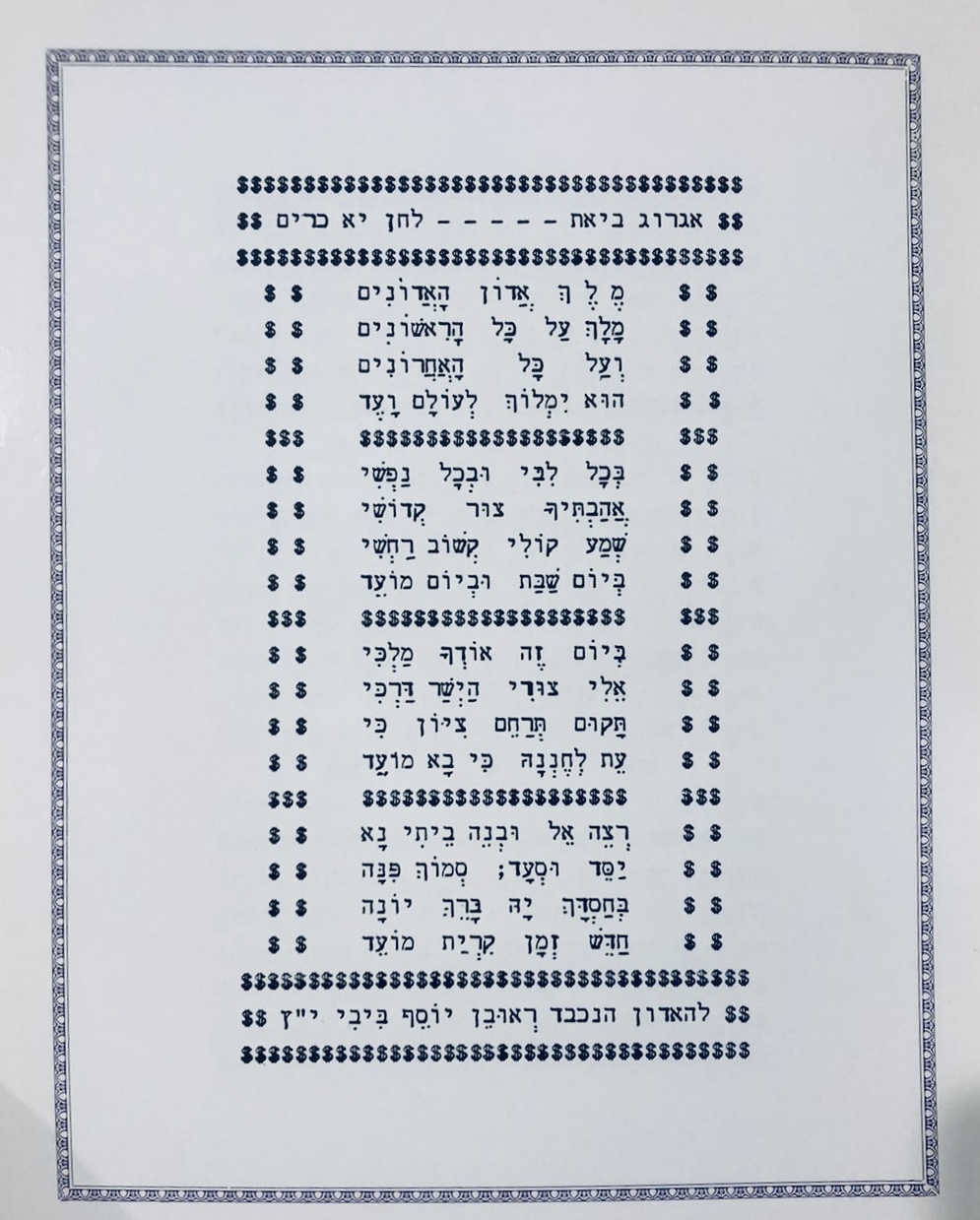
| 4834 | מלך אדון האדונים | Ezekiel Hai Albeg Maqam Bayat In honor of Mr Rubin Bibi. Albeg, Mizmor Shir, 1960 |
Meir Levy: RB |
בפי ישרים | ||
| 4857 | רנה אגיד לאל על | Ezekiel Hai Albeg Maqam Sigah In honor of Joseph Jack Mevorach. |
Meir Levy: Semehim |
|||
| 5900 | שחרחורת | Maqam Bayat |
Meir Levy: Naqdishakh |
|||
| 5901 | מצירלו | Maqam Hijaz "Misirlou" is a Greek melody. |
Meir Levy: Qaddish |
|||
| 5902 | עושה שלום במרומיו | Maqam Nahwand |
Meir Levy: Mimisrayim Meir Levy: RB |
|||
| 5998 | אשיר לאל אשר שבת | Shabbat. |
Meir Levy: Keter |